44.108, -91.988
Regenerate a mature red oak stand to a young stand of similar composition, comparing clearcut and shelterwood methods.
44.1795, -91.9163
Regenerate a mature red oak stand to a young stand of similar composition.
43.626735, -91.304481
Regenerate a mature oak stand to a young stand of similar composition.
47.753564, -92.586092
Harvest the mature Aspen before it deteriorates and loses commercial value, while increasing diversity to push for a more resilient stand.
47.210716, -93.416667
Aspen timber sale on county land by a private contract with a logger. Enhance wildlife habitat for ruffed grouse.
47.095924, -93.58099
Create a young stand of quaking aspen enriched with long-lived conifers including: white pine, white spruce, and white cedar
46.446049, -91.51028
Regenerate a vigorous stand of jack pine that will be managed on a 48-year rotation in order to achieve timber production objectives as well as Pine Barrens ecological/wildlife objectives within Wisconsin’s Northwest Sands Landscape.
48.244194, -93.84375
Regenerate an even-aged stand of merchantable timber that is dominated by jack pine.
46.047033, -92.432486
Increase recruitment success of oak seedlings/saplings into larger size classes to ensure the species is a co-dominant/dominant species in the next mature stand.
47.225276, -92.101334
The goal on all three stands was to decrease the overall abundance of trembling aspen, paper birch, and balsam fir while increasing the abundance of long-lived conifers such as red pine, white pine, white, and black spruce.
44.06028, -91.97694
Retain oak and walnut in the future mesic hardwood stand and minimize loss of plant diversity due to timber harvesting in a MHs39b plant community.
47.5043, -91.9072
Increase stand resilience by increasing species diversity (promoting cool climate-dependent tree species) and structural complexity following a commercial timber harvest.
46.1269, -92.7429
Regenerate a mature stand of aspen to a young stand of similar composition while reducing the future spread of buckthorn.
48.467429, -93.521118
Monitor the spread of dwarf mistletoe, Arceuthobium pusillum, within the stand
47.547518, -93.374005
Introduce conifer species into a stand previously composed of almost pure aspen.
45.398925, -93.712896
Reduce buckthorn and other shrub competition and establish planted red pine seedlings in a recently harvested oak stand transitioning to oak-pine mixed species stand
47.379596, -94.61931
Increase resilience of black ash stands threatened by emerald ash borer (EAB) through regeneration harvests aimed at increasing representation of non-ash species.
46.68904, -92.51695
Maintain diversified composition and structure for economic and ecological resilience using a clearcut with reserves system and both natural and artificial techniques to regenerate a mix of conifers and hardwoods.
48.261111, -93.755583
Reforest a healthy black spruce even-aged stand that is 95% stocked at 1500 trees per acre after a clearcut.
46.681857, -92.572386
Regenerate aspen while retaining ruffed grouse habitat needs.
46.121399, -94.011644
Regenerate a mature ash stand to a more diverse young stand in order to maintain a forested condition, considering imminent invasion by emerald ash borer (EAB) and anticipated climate change impacts on a very wet site.
46.705391, -92.542747
Clearcut red pine overstory and reinitiate even-aged, early-successional community while observing the effects of different skidding, processing, and biomass retention treatments on artificial and natural jack pine regeneration.
46.6692, -92.78535
Harvest ash and plant with non-ash species to diversify stand composition in preparation of imminent Emerald Ash Borer (EAB) infestation.
47.666, -91.271
Use an interdisciplinary approach to create a large young forest patch more representative of natural disturbances in boreal landscapes.
44.695476, -92.715319
Promote regeneration of floodplain tree species and prevent conversion of site to reed canary grass. Provide wildlife habitat for the next 50 to 100 years.
46.646648, -92.650839
Use residual patches of eastern white pine within aspen stands for future natural regeneration. Aspen stand to be harvested while white pine seedlings establish.
44.523547, -92.435569
Regenerate a mature red oak stand to a young stand of similar composition, using natural regeneration with well-timed mechanical site preparation.
44.1426, -92.0103
Regenerate a mature oak and walnut stand to a young stand with similar composition, while improving growth and timber quality of residuals.
44.50375, -92.554844
Regenerate a mature oak stand to a young stand with similar composition.
44.52316, -92.55608
Regenerate a mature oak stand to a young stand of similar composition using clearcut with reserves method.
47.485156, -93.360295
Use patch clearcuts in a string-of-pearls configuration to create gaps in which to plant white spruce to create mixed wood
47.55045, -93.59184
Increase within stand compositional and structural diversity by increasing conifers and non-aspen hardwoods as appropriate based on native plant community and management plan goals.
48.260273, -94.134583
Reforest a black spruce lowland with a local seed source.
46.775838, -94.890726
Measure ecological recovery following stand reinitiation and site preparation
47.144449, -93.722215
Utilize pre-commercial thinning in a quaking aspen (Populus tremuloides) stand to increase diameter growth and decrease rotation age.
44.107258, -91.849965
Regenerate a mature oak stand to a young stand of similar composition.
43.597623, -91.318812
Regenerate a mature oak stand to a young stand of similar composition.
44.173115, -92.008917
Regenerate a mature oak stand to a young stand with similar species makeup following a prescription of: underplanting of oak and walnut seedlings 2 to 3 years before harvest; clearcut with reserves harvest; post-sale killing of competing tree stems.
48.608, -95.18311
Increase biological diversity of a young jack pine stand through prescribed burning.
47.664723, -93.262129
Use natural and artificial regeneration practices to regenerate a natural origin red pine site with characteristics that mimic a natural origin stand in structure and diversity, while maintaining red pine as the dominant species.
47.76846, -93.04353
Use natural and artificial regeneration practices to regenerate a natural origin red pine site with characteristics that mimic a natural origin stand in structure and diversity, while maintaining red pine as the dominant species.
47.666093, -92.954166
Use natural and artificial regeneration practices to regenerate a natural origin red pine site with characteristics that mimic a natural origin stand in structure and diversity, while maintaining red pine as the dominant species.
47.24034, -93.13845
Use natural and artificial regeneration practices to regenerate a natural origin red pine site with characteristics that mimic a natural origin stand in structure and diversity, while maintaining red pine as the dominant species.
44.600222, -92.625645
Regenerate the mature portion of a lowland hardwoods stand to a young stand of similar composition and improve health and vigor of younger portion of the stand.
44.665304, -92.731634
Regenerate mature lowland hardwood stands to young stands of similar composition.
47.715497, -90.87606
Establish an even-aged mixed woods stand comprised of jack pine, aspen, paper birch, and balsam fir.
47.715497, -90.87606
Establish an even-aged mixed woods stand comprised of aspen, white spruce, balsam fir, and white pine.
47.715497, -90.87606
Establish white pine as a dominant overstory species.
48.244778, -93.5073
To regenerate jack pine after clearcutting with reserve trees, at 800 trees per acre with 95% stocking of desirable trees, 75% stocking of jack pine that is free-to-grow.
45.477079, -90.675107
To regenerate black ash and promote non-ash species.
47.410257, -95.13045
Even-aged management to produce successive crops of jack and/or red pine.
43.852085, -91.485022
Regenerate a mature oak stand to a young stand of similar composition.
43.707487, -91.622814
Regenerate a mature oak stand to a young stand of similar composition.
43.859526, -91.467463
Regenerate a mature oak stand to a young stand of similar composition.
46.203202, -94.492236
Establish or maintain uneven aged pine-mixed hardwood stands with a significant white pine component using natural regeneration.
47.306, -94.735
Even aged management of Red Pine. This treatment tested the effect on seedling growth of adding N to Velpar applied for competition control.
48.753137, -95.333581
Harvest standing jack pine and aerial seed back to jack pine with mechanical site prep.

Assessing the success of group openings in recruiting mid/intolerant deciduous tree species (Haliburton Forest and Wild Life Reserve)
In this field trial, we investigated the effects of group opening treatments on the regeneration of yellow birch, black cherry, and red oak in Haliburton Forest and Wild Life Reserve, 2-3 years after implementation of the group openings.
Cover type: Northern hardwoods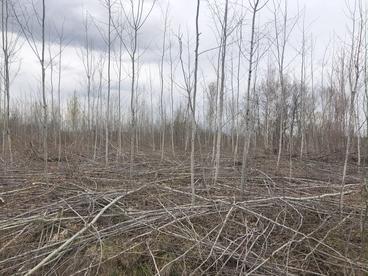
Pre-commercial aspen thinning (UPM Blandin)
Utilize pre-commercial thinning in a quaking aspen (Populus tremuloides) stand to increase diameter growth and decrease rotation age.
Cover type: Aspen-Birch
Swamp tree planting using mounding (Fond du Lac)
Restore this wetland to a culturally useful forested condition that is more resilient to human stressors, particularly climate change, than the previous forest.
Cover type: Ash
Comparing Pine Regeneration Methods and Tactics in the Cloquet Valley State Forest (MN DNR)
The goal on all three stands was to decrease the overall abundance of trembling aspen, paper birch, and balsam fir while increasing the abundance of long-lived conifers such as red pine, white pine, white, and black spruce.
Cover type: Pine
Goose Island Deer Repellent Test (US Army Corps)
The objective of the planting was to test the effectiveness of deer fence and animal protein-based deer repellent on growth and survival of swamp white oak and river birch seedlings.
Cover type: Other
Mississippi River Pool 3 Floodplain Forest Silvicultural Trials (US Army Corps of Engineers)
Promote regeneration of floodplain tree species and prevent conversion of site to reed canary grass. Provide wildlife habitat for the next 50 to 100 years.
Cover type: Other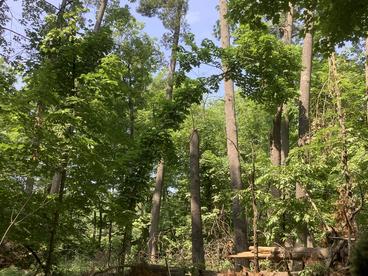
Variable Overstory Density Management for White Pine Regeneration in Two Native Plant Communities (MN DNR)
Establish or maintain uneven aged pine-mixed hardwood stands with a significant white pine component using natural regeneration.
Cover type: Mixed Woods
Shelterwood and slash walls to regenerate northern red oak and eastern hemlock (USFS)
Objectives of this stand include a shelterwood harvest, tending of the stand via understory cutting, constructing a slash wall for deer exclusion, and evaluating the effectiveness of excluding deer and the natural regeneration success.
Cover type: Northern hardwoods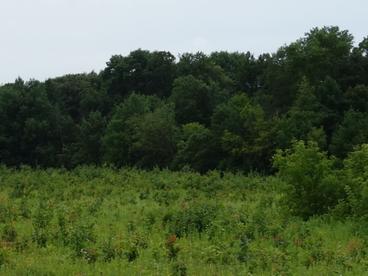
Direct Seeding of Hardwoods on a Former Agricultural Site with Observations on Soil Compaction (MN DNR)
Improve water quality, wildlife habitat, outdoor recreation opportunities and produce forest products by establishing a mixed hardwood stand on a former agricultural field.
Cover type: Other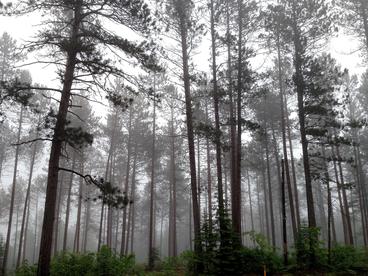
Fuels Reduction Thinning in Multi-Aged Red Pine (UMN-CFC)
To lower stand density in a spatially heterogeneous fashion, reduce fuel-loading in a mature stand by disconnecting foliage between the canopy and sub-canopy, and increase aesthetic appeal of a multi-aged red pine stand.
Cover type: Pine