
46.671551, -92.705598
On this page:
Overview
This site is located between two of Fond du Lac reservation’s wild rice lakes, on the north side and south side of Highway 210. It was formerly a forested swamp resembling the native plant community WFn64b- dominated by black ash (Fraxinus nigra), with significant components of cedar (Thuja occidentalis) and elm (Ulmus americana), and minor components of red maple (Acer rubrum), paper birch (Betula papyrifera), balsam fir (Abies balsamea) and yellow birch (Betula alleghaniensis). This site then underwent a rather severe hydrological disturbance as a result of the construction of Highway 210. On the north side of the highway, this disturbance killed >80% of the black ash, >90% of the cedar, and functionally all canopy trees of the other species. Currently, ash and cedar are slowly trying to re-colonize this wetland, with black ash having quicker success than cedar, but tree sapling and seedling density is still quite low. Aspen and birch seed in from the road, but as the site is too wet for these species to do well, saplings are not healthy. Red maple is scarce to absent in the wetland, despite its abundance on surrounding uplands. Yellow birch and elm are absent on the north side. Current vegetation is dominated by sedges (Carex spp.) and bluejoint grass (Calamagrostis canadensis).
On the south side, the hydrological disturbance killed about 55% of the ash, and around 85% of the elm, red maple, birch and cedar, and functionally all other canopy trees. Current vegetation on the south side is more mixed; dominated by sedges and bluejoint grass in some areas to being dominated by low densities of black ash forming a light canopy above ferns, red raspberry and sedges in other areas. On both sides, the invasive reed canary grass (Phalaris arundinacea) and the native Phragmites are present near the highway and are positioned to enter the stand.
This case study describes both the north and south stands. While the installation of Highway 210 split the stand into a north and south side and led to differences in hydrology and species composition, results and takeaways for managers are primarily focused on findings from the north stand which implemented the mounding methodology and a wider selection of experimental species planting.
Silviculture Objectives
We want a forested swamp to stabilize the hydrology and lessen the impact of rain events on wild rice lakes. This forested swamp should have some species native to Fond du Lac (located in what is now Carlton County, MN) that are sought out for cultural use, but should also have species that are resilient to climate change and diseases and can be utilized by both wildlife and Ojibwe band members.
Pre-treatment stand description and condition
Stand establishment and management history
The stand was historically unmanaged and reverted to a non-forest state following the hydrological disturbance from building Highway 210. This split the stand into a north and south side and led to differences in hydrology and species composition.
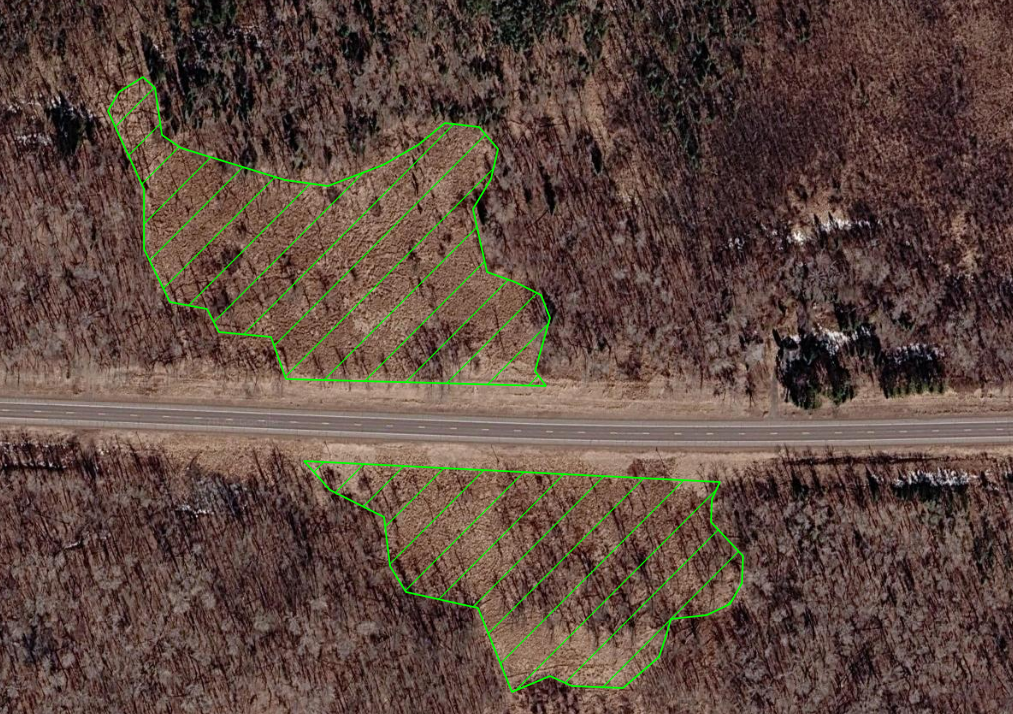
Figure 1: A map of the project area showing the north and south sides. This case study primarily describes the treatments implemented on the north side.
Pre-treatment species composition
Bluejoint grass, wetland sedges, reed canary grass are dominant in areas. On the north side there are some black ash and a few cedar that survived the disturbance. Red maples in the surrounding forest have been trying to seed in for decades with little to no success. On the south side, around 45% of the ash survived; a small number of American elm and cedar also survived.
Pre-treatment growth and stocking
Unstocked on the north side. On the south side: 8 cords/ acre of black ash, 0.1 cords per acre of elm
Pre-treatment forest health issues
Hydrological disturbance killed >90% of the forest canopy on the north side of the road and 65% of the canopy on the south side. The former dominant species, black ash, is threatened by emerald ash borer.
Silviculture Prescription
First we sent a survey of what species Band members are looking to have more of on the reservation. The results from the survey indicate Band members are looking for more prescribed fire, more native food plants, cedar, more birch, and to a lesser extent more mast-producing hardwoods. Survey results also indicate that assisted migration is viewed as more positive than negative when done with species native to within the range of the areas in the USA that have a historic climate similar to the IPCC’s conservative projections for the future climate of Carlton County. More prescribed fire is not applicable, and there aren’t many native food plants that can grow on this site. Cedar, however, provides excellent cover and is very much in line with what band members want.
The scarce research that does exist indicates that microtopography, particularly hummock mounds, are present and usually facilitate natural regeneration in most conifer swamps. Mounding methodology in research is more expensive to implement, so 4 sources of funding; the Bureau of Indian Affairs, the Natural Resource Conservation Service, the American Bird Conservancy, and the State of Minnesota were needed to fund the cost of implementing this project. In the few studies mounding has been tried, methodology was taken from these two studies (2014: and 2023: ) and applied to cedar, river birch and swamp white oak on the north side. Cedar by itself, could be vulnerable to climate change. Swamp white oak and river birch will also be planted, with the mounding methodology to make the future forest more resilient. Swamp white oak is long-lived, forecasted to do well in the future climate, and provides good mast for game species. River birch is the species of birch best adapted to heat, and it is also forecasted to do well in the future climate. River birch can also cross with paper birch, which could bring heat tolerance into the local paper birch genome in the event that river birch is not culturally useful in the way that paper birch has historically been used. A small amount of hackberry (Celtis occidentalis) and black spruce (Picea mariana) were also planted due to a surplus of black spruce that planting year and to see if this site is suitable for hackberry. Some other species were considered; these species and the reasons they were not planted are below:
- Tamarack, red maple, yellow birch: these species would be regenerating in this stand naturally if this site were suitable for them.
- Manchurian ash: No research on how this exotic species will affect the wetland
- Manchurian ash-black ash crosses: not commercially available, no research on how these hybrids could potentially affect the wetlands
- Dutch elm disease-resistant American Elm: not financially feasible.
- Blue ash: No commercial nursery source.
- Rock elm: No commercial source
- Silver Maple: Poor performance on other similar sites. Likely not suitable for this site. Limited wildlife value.
- Balsam poplar, paper birch: these species are present around the site but individuals in the site are already of poor health; the future climate would likely give them even more problems.
- American Sycamore: No reliably cold-hardy commercial source. The hydroperiod for this site is rather long for this species.
On the south side, only hackberry was planted, without mounding, to minimize costs.
What actually happened during the treatment
Mounding was done successfully with shovels initially and eventually with a marshmaster. The study for which the mounding methodology is from recommends:
- 1 gallon of mound mud per foot of tree height
- Trees have a height of 2’ or taller, and
- Mound mud should consist of hemic, moderately decomposed organic matter.
On this particular site, mud on the upper 3” of site soil was not decomposed enough to make good mounding material. However, mud 6” to 2’ down often made good mounding material. Although we were able to get this material without the use of a marshmaster, the excavation head on the marshmaster enabled us to excavate this material much faster. We found that excavating holes that were about 4’ deep and 3' x 5' generally provided enough mound mud for about two-thirds of an acre.
The cedar stock was a bit short (12"-18" as opposed to 2') and the nursery was unable to supply the larger size swamp white oak, so 6"-12" stock was utilized. Surveys indicated that cedar is a species that the community desires more of. There were some black spruce that were planted on this site that were intended for another site. The black spruce results were not impressive (this isn’t quite the right site for black spruce) at 3 survivors out of about 15 planted and moderate height growth (~2-3”/yr).
Yellow netted cones were used for browse protection, but it was later discovered that these cones can leave microplastics when they biodegrade. The blue solid cones, which also leave plastic in the environment, were found to be very inefficient because fewer of them can be carried through the swamp when they are assembled, and putting them together is time-consuming.
Post-treatment assessment
Table 1: Three-year survival results for the north and south side. The mounding methodology was only implemented on the north side.
| North side, mounded | N sampled | Survival | Average annual growth (in) | Starting size | Stock |
|---|---|---|---|---|---|
| Northern white cedar | 535 | 72% | 5.11 | 12"-18" | 2-2 |
| River birch | 162 | 39% | 7.99 | 24"-36" | 2-1 |
| Swamp white oak | 78 | 41% | 3.33 | 6"-12" | 2-1 |
| South side, unmounded | N sampled | Survival | Average annual growth (in) | Starting size | Stock |
| Hackberry | 318 | 1% | -1.33 | 10"-18" | 2-0 |

Figure 2: Height growth results for hackberry, northern white cedar, river birch, and swamp white oak. Hackberry was only planted on the south side and the mounding methodology was not used.
Note: South side results are for growth for 2024 due to lack of survivors on the south side in 2025. Survival on north side in 2025 (the fourth growing season) continues to be good.
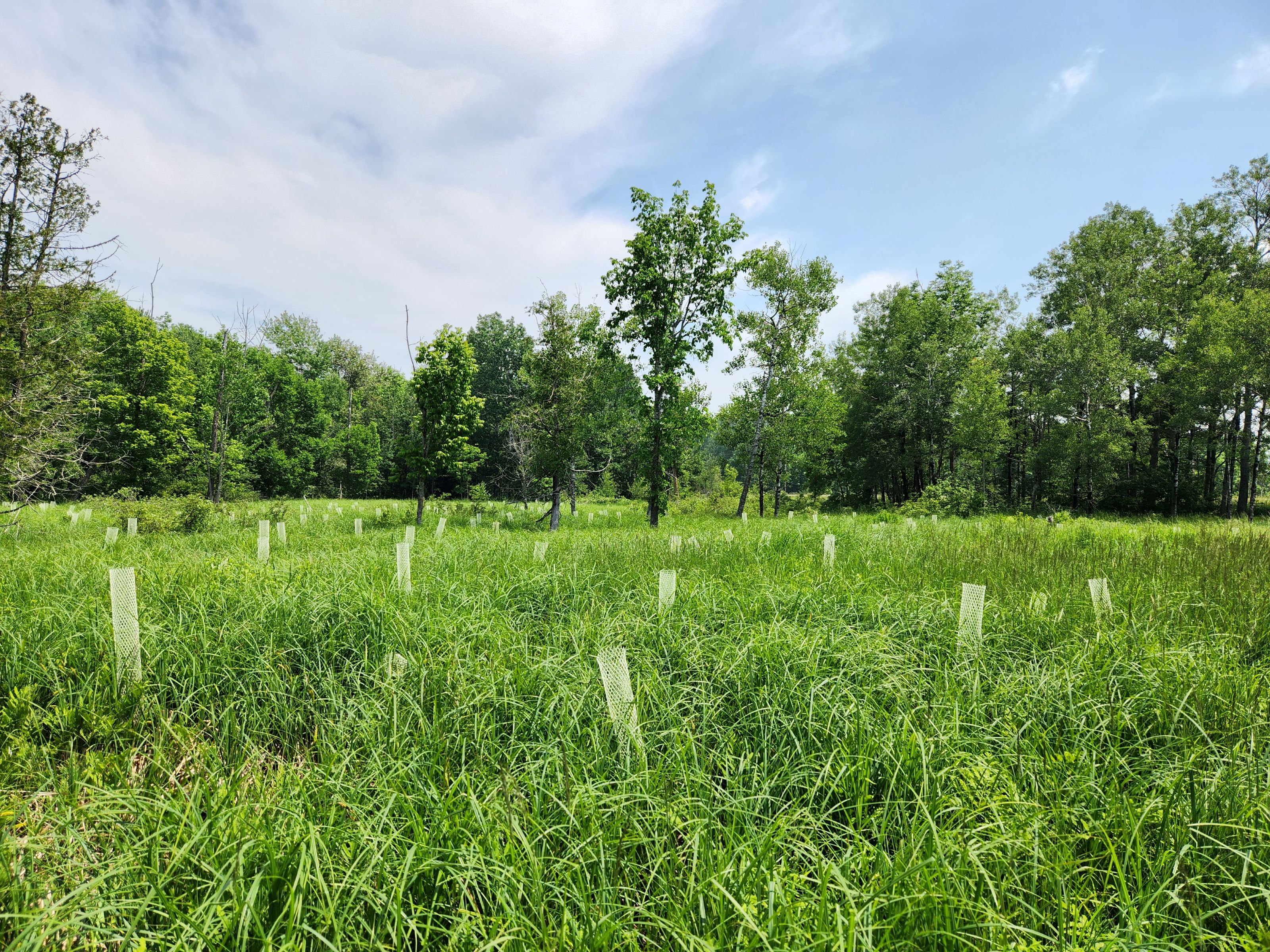
Figure 3: The north side in 2023, facing east.
Plans for future treatments
None on the north side. Re-plant south side with mounding methodology if funding permits.
Costs and economic considerations
This project cost was about 2.7 times higher than what an equivalent upland planting would have cost.
Climate adaptation considerations
Climate adaptation was a strong justification for including both river birch and swamp white oak; they are resilient to a warm climate and river birch has potential to cross with paper birch to bring genetics better adapted to heat into the paper birch genome. Hackberry is also climate-adapted.
Other notes
Works cited:
Mehne, Alex C.; Mehne, Charles J. (2014). "Effects of mounding on planting conifers in wetlands". Minnesota Forestry Research Notes 299, Department of Forest Resources, University of Minnesota. https://hdl.handle.net/11299/170432
Mehne, Alex C.; Mehne, Charles J. (2023). "Field Observations from Reforesting a Typha-Dominated Conifer Swamp in Southwest Michigan". Tree Planter's Notes Volume 66, Number 1. USDA Forest Service.
Summary / lessons learned / additional thoughts
In the future we would not go with small stock for swamp white oak. If we could do it over, we also would want to try mounds of differing mounding material for the hardwoods; the wetlands that most of the swamp hardwoods thrive in tend to be less organic. This is no doubt related to the climatic effect on decomposition with their ranges, but nonetheless could indicate that they may be better adapted to mineral soil. We experimented with this mounding methodology on the north side, but the benefits of this treatment are apparent compared to no actions taken on the south site which is dominated by wetland vegetation and has almost no regenerants. Lastly, we would want to procure cones that both 1) biodegrade into safe, non-plastic materials and 2) fit inside of each other so more of them can be carried.