46.179199, -90.464984
Regenerate northern hardwoods species to maintain the northern hardwoods covertype.
46.001667, -90.338583
Introduce more structure into the stand and convert it to an uneven-aged stand.
45.20148056, -78.59005833
In this field trial, we investigated the effects of group opening treatments on the regeneration of yellow birch, black cherry, and red oak in Haliburton Forest and Wild Life Reserve, 2-3 years after implementation of the group openings.
43.643508, -91.29064
Improve stand health, composition and timber quality through intermediate stand treatments.
46.251067, -92.389309
Oak crop tree release to improve timber quality, stand health and mast production for wildlife.
44.600222, -92.625645
Regenerate the mature portion of a lowland hardwoods stand to a young stand of similar composition and improve health and vigor of younger portion of the stand.
46.422387, -92.01315
The silvicultural objective for this area (unit 1) was a crop tree release, improvement thinning with regeneration gaps.
43.201444, -90.66377
Transition from a two aged oak dominated stand to multi-aged northern hardwood stand

Comparing Pine Regeneration Methods and Tactics in the Cloquet Valley State Forest (MN DNR)
The goal on all three stands was to decrease the overall abundance of trembling aspen, paper birch, and balsam fir while increasing the abundance of long-lived conifers such as red pine, white pine, white, and black spruce.
Cover type: Pine
Goose Island Deer Repellent Test (US Army Corps)
The objective of the planting was to test the effectiveness of deer fence and animal protein-based deer repellent on growth and survival of swamp white oak and river birch seedlings.
Cover type: Other
Mississippi River Pool 3 Floodplain Forest Silvicultural Trials (US Army Corps of Engineers)
Promote regeneration of floodplain tree species and prevent conversion of site to reed canary grass. Provide wildlife habitat for the next 50 to 100 years.
Cover type: Other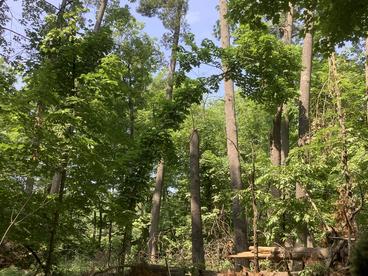
Variable Overstory Density Management for White Pine Regeneration in Two Native Plant Communities (MN DNR)
Establish or maintain uneven aged pine-mixed hardwood stands with a significant white pine component using natural regeneration.
Cover type: Mixed Woods
Shelterwood and slash walls to regenerate northern red oak and eastern hemlock (USFS)
Objectives of this stand include a shelterwood harvest, tending of the stand via understory cutting, constructing a slash wall for deer exclusion, and evaluating the effectiveness of excluding deer and the natural regeneration success.
Cover type: Northern hardwoods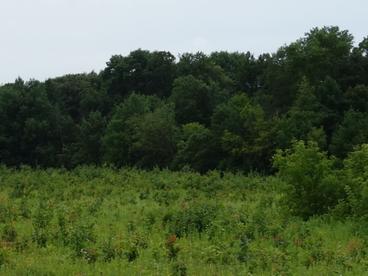
Direct Seeding of Hardwoods on a Former Agricultural Site with Observations on Soil Compaction (MN DNR)
Improve water quality, wildlife habitat, outdoor recreation opportunities and produce forest products by establishing a mixed hardwood stand on a former agricultural field.
Cover type: Other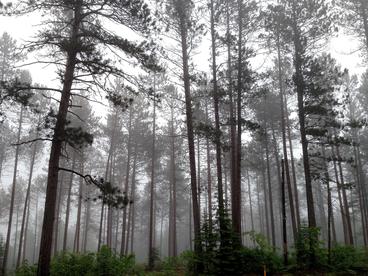
Fuels Reduction Thinning in Multi-Aged Red Pine (UMN-CFC)
To lower stand density in a spatially heterogeneous fashion, reduce fuel-loading in a mature stand by disconnecting foliage between the canopy and sub-canopy, and increase aesthetic appeal of a multi-aged red pine stand.
Cover type: Pine
Oak Scarification Trials using Good Neighbor Authority (USFS/WDNR)
Promote mixed oak-pine stands for quality sawtimber and wildlife habitat associated with the Northern Dry-Mesic Forest natural community. Test various mechanical scarification techniques to create favorable seedbeds and increase oak and white pine regen.
Cover type: Central hardwoods
Oak Wilt Control on the Chequamegon-Nicolet National Forest Using the Root Rupture Method (USFS)
Cost effective and operationally feasible control of oak wilt in a forested setting.
Cover type: Central hardwoods
Prescribed burning to increase blueberries and ericaceous shrubs (MN DNR)
Increase biological diversity of a young jack pine stand through prescribed burning.
Cover type: Pine